
Stop pressing harder when you shave your head
Most bad head shaves do not start with a bad razor. They start with a hand trying to do too much.
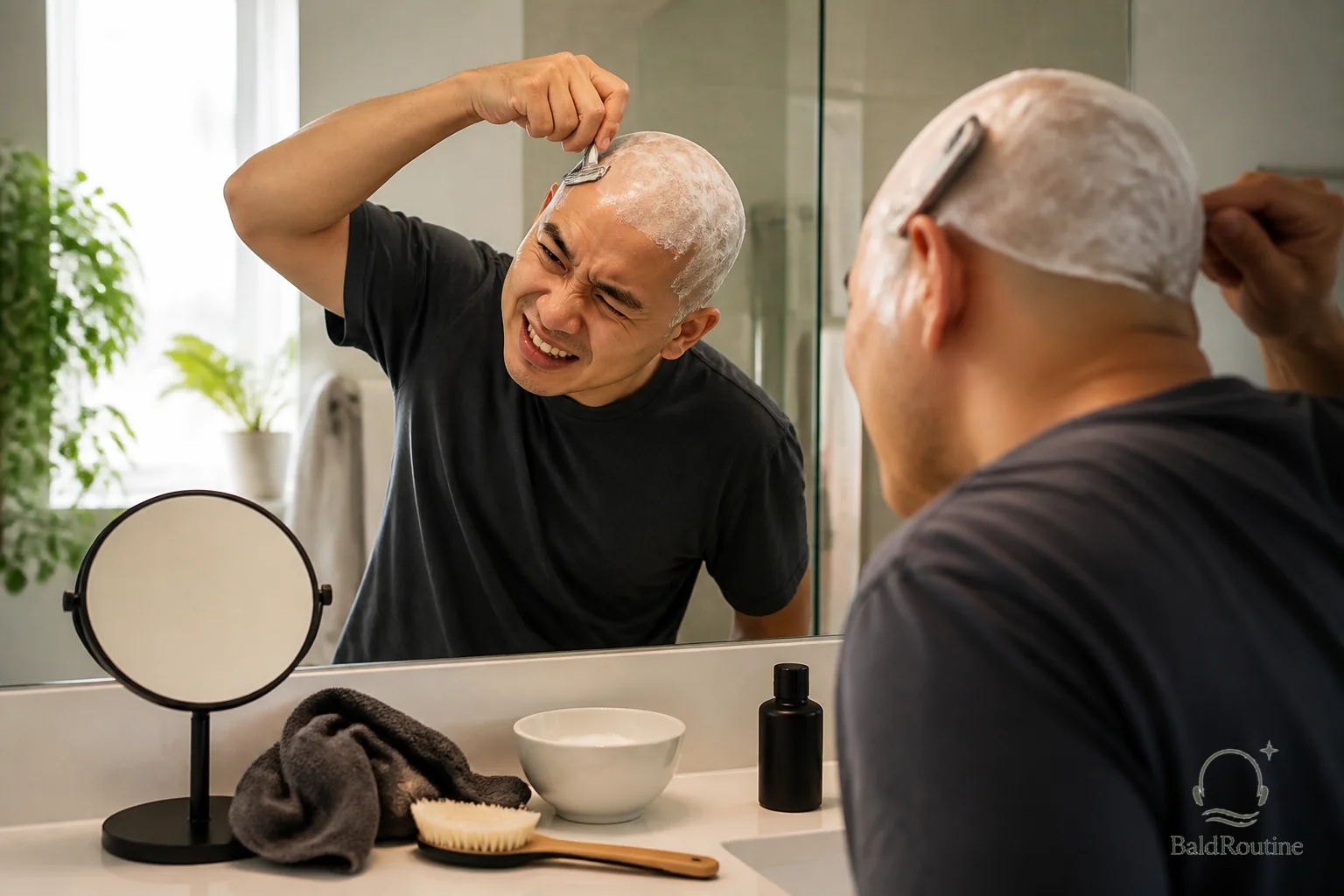
When a patch feels rough, the instinct is obvious: press harder. When the back of the head is awkward, press harder. When the razor skips, press harder. It feels like control.
It usually is not.
Extra pressure can turn a normal shave into a tight, hot, stingy scalp. You might get the hair shorter in a few spots, but the tradeoff is a scalp that feels like it had to survive the job.
A bald head does not need a punishment pass. It needs steady contact, slick prep, and enough patience to let the blade or shaver do the work.
Why pressing harder backfires
Your scalp is not flat like a cheek. It has curves, dips, soft spots, and awkward areas you cannot fully see. That makes pressure tricky.
When you press down hard with a razor, you are not just cutting hair. You are also scraping more against the surface of the skin. With an electric shaver, hard pressure can make the head drag, heat up, or catch in areas where the skin is not sitting evenly.
That is why a shave can look fine in the mirror but feel rough 20 minutes later.
Common signs you are using too much pressure:
Your scalp feels hot after shaving
You see redness in the same areas every time
The shave stings when you rinse
Moisturizer burns more than usual
You keep needing extra passes over the same spots
The back of your head feels tender after the shave
If that sounds familiar, your tool might not be the only problem. Your grip and pressure may be doing more damage than the blade.
For more causes of post shave sting, read 5 Things that make a bald head sting after shaving.
The goal is contact not force
A good head shave needs contact. It does not need force.
Think of the razor or shaver as something that should glide over the scalp, not dig into it. Your job is to keep it stable and lined up. The tool's job is to cut.
That sounds simple, but it changes the whole shave.
Instead of pushing the razor into the scalp, place it on the skin and move with slow, controlled strokes. If you are using a manual razor, keep the head of the razor lightly against the scalp and let the blades meet the hair without extra downward force.
If you are using an electric head shaver, let the shaving head sit against the scalp with light pressure. Move slowly enough that the cutter can do its job. Rushing an electric shaver often leads to the same bad habit: pressing harder to make up for speed.
Speed and force are a bad team.
Fix the reason you are pressing harder
People usually press harder because something else is off. Fix that first.
Your scalp is too dry before the shave
Dry skin creates drag. Drag makes the razor feel like it is not cutting well. Then you press harder.
Before a wet shave, soften the scalp with warm water. Give it a minute. Do not just splash and start scraping. Use enough shave cream or gel to keep the razor moving cleanly.
For dry shaving with an electric tool, make sure the scalp is clean and not sticky from yesterday's product. A greasy or tacky scalp can make the shaver drag.
Your strokes are too long
Long strokes across the scalp are harder to control. They also make it easier to increase pressure without noticing.
Use shorter strokes, especially around the crown, temples, and back of the head. Short strokes keep the angle steadier and make it easier to rinse or clear the blade.
You keep chasing one stubborn patch
Everyone has an annoying patch. Usually it is the crown or the back of the head where hair grows in different directions.
Do not attack it with force. Change direction carefully instead.
Use one light pass with the grain, then another light pass from a different angle if your scalp handles it. If the area starts feeling tender, stop. A tiny bit of shadow is better than a scalp that feels angry all day.
Your blade or shaver is struggling
Sometimes pressure is a symptom of a dull blade, clogged cartridge, dirty shaver head, or tool that is not suited to your scalp.
If you have to push to make the tool work, that is useful feedback. Clean it, rinse it, replace what needs replacing, or adjust your routine. Do not turn your hand into a backup motor.
A lighter pressure routine for a bald head shave
Try this the next few times you shave.
Start with a clean scalp. Remove sweat, oil, and leftover product.
Use warm water before a wet shave. Give the scalp time to soften.
Apply enough shave product to reduce drag.
Hold the razor or shaver with a relaxed grip.
Use short, slow strokes instead of long swipes.
Let the tool stay in contact without pushing down.
Rinse the blade or clear the shaver head often.
Reapply slickness before another wet pass.
Stop when the shave is good enough, not when your scalp is irritated.
Rinse, pat dry, and moisturize lightly.
That last part matters. A hard shave followed by air drying is a double insult. Pat the scalp dry and use a light moisturizer so the skin does not feel tight later.
If you shave often, it is worth tightening the whole routine. Daily head shaving without wrecking your scalp covers that rhythm in more detail.
Common pressure mistakes
The biggest mistake is treating the scalp like it needs to be sanded smooth.
It does not.
Watch for these habits:
Pressing harder around the crown because the hair grows weird there
Shaving the same spot again and again without adding more slickness
Using long fast strokes on the back of the head
Holding the razor in a tight fist
Trying to make an old blade act new
Dry shaving over sweat or leftover product
Ignoring sting because the shave looks clean
That last one is common. A shave can look close and still be too aggressive. Your scalp gets a vote.
Simple checklist
Before your next head shave, run through this:
Is my scalp clean before I start?
Did I soften the scalp or reduce drag?
Am I using short strokes?
Is my grip relaxed?
Am I letting the tool cut instead of forcing it?
Did I rinse or clear the tool often?
Am I stopping before the scalp feels hot?
Did I pat dry and moisturize after?
If you only change one thing, change the pressure. Use less than you think you need. Then slow down enough for the tool to work.
Keep the shave close without making it a fight
A bald head routine should not feel like a daily argument with your scalp.
Pressing harder feels productive, but it often creates the exact problems people blame on razors, shavers, or products. Sometimes the better move is boring: lighter pressure, shorter strokes, better prep, and knowing when to stop.
That is not fancy. It just works better than trying to win the shave by force.
Want a simpler routine without turning your bathroom shelf into a grooming aisle? Build one at BaldRoutine.
Interest list
Want a product checklist?
Save a simple bald scalp care checklist and occasional practical tips. No routine is locked behind email.
Keep reading
Related guide
The pre-shave mistake that leaves your bald scalp dry
If your scalp feels dry after every head shave, the problem may start before the blade. Fix the prep before you add another bottle.
Related guide
The washing mistake that keeps your bald scalp dry
If your shaved head feels dry right after you clean it you may be scrubbing off more than stubble. A simple wash routine can keep your scalp comfortable without adding five bottles to the shelf.
Related guide
Stop adding products to a dry bald scalp
If your bald scalp feels dry after shaving, another bottle is not always the fix. Start with rinse, pressure, timing, and one boring moisturizer.