
Stop buying head shaving tools you do not need
A bald head routine can get weirdly crowded fast.
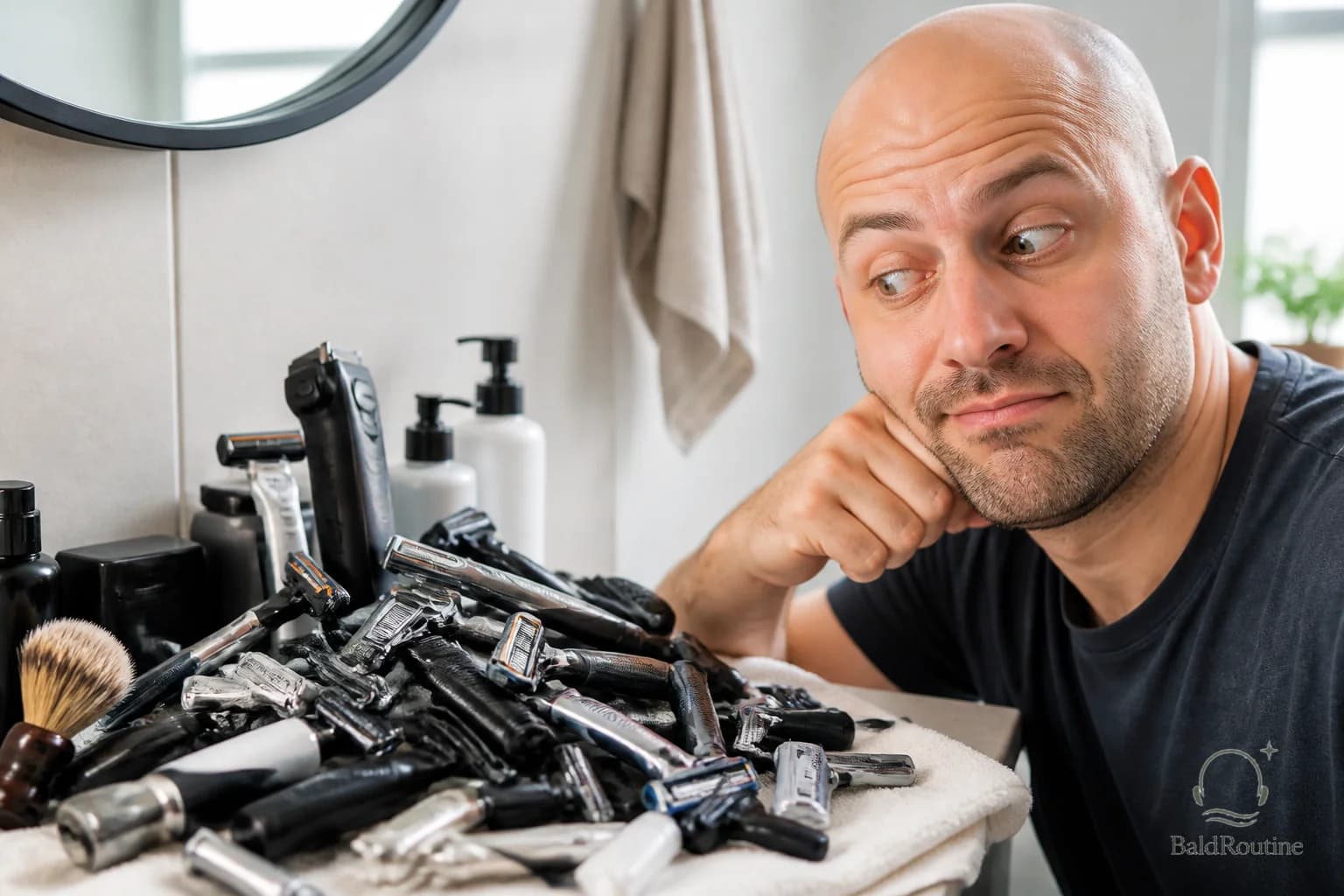
One razor becomes two. Then a backup electric shaver. Then a brush, a bowl, a special towel, three shave products, a mirror that fogs anyway, and some gadget that looked useful at midnight but now lives under the sink like evidence.
More tools can help, but only if they solve a real problem. Most shaved head routines do not need more gear. They need fewer weak links. The first useful move is to stop treating every awkward shave like a shopping problem.
If you are building a head shaving setup, the goal is not to own the most complete kit. The goal is to get a close enough shave without scraping your scalp, wasting time, or making your bathroom look like a barber supply closet exploded.
Tool clutter makes the shave harder
A bald scalp is not complicated, but shaving your own head does have a few awkward parts.
You cannot see every angle clearly. The back of the head has curves. The grain can change direction. The skin is exposed after the shave, so sloppy prep and cleanup are more obvious than they were when hair covered everything.
That is where people start buying tools.
The problem is that a new tool can hide a technique issue for about a week. Then the same tugging, missed patches, dryness, or shine comes back. Now you have the same routine, plus more stuff to clean.
A better buying rule: every tool should earn its place by doing one of five jobs.
Soften and prepare the scalp
Cut hair cleanly
Help you see and reach awkward areas
Rinse and clean up properly
Protect the scalp after shaving
If a tool does not clearly help with one of those jobs, it is probably just sink clutter with branding.
The core head shaving tools worth owning
Start with a small setup before you upgrade anything.
1. One main shaving tool
Pick one primary cutter and learn it well.
That can be a cartridge razor, safety razor, or electric shaver. Each has tradeoffs.
A cartridge razor is familiar and forgiving for many beginners, but replacement heads can get expensive. A safety razor gives more control and cheap blade swaps, but it is less tolerant of pressure and rushing. An electric shaver is convenient and can be easier for frequent shaving, but it may not give the same smooth feel as a wet shave.
None of these is the morally superior bald guy choice. The best one is the one you can use consistently without dragging, pressing, or turning the shave into a project.
If you are still deciding, read Electric shaver vs razor for a bald head shave.
2. A slick shave product
Do not treat shaving cream or gel like decoration. It is there to reduce friction and help the blade move without catching.
For a bald head, the product should spread easily, stay slick while you work around the head, and rinse clean. If it dries out halfway through, you either need to reapply water or use something better suited to the pace of a head shave.
You do not need six options. You need one that does not fight you.
3. A mirror setup that shows the back
Missed patches often come from bad visibility, not bad razors.
A simple handheld mirror paired with your bathroom mirror can do more than another fancy blade handle. Good lighting helps too. If you shave in a dim bathroom and guess your way around the crown, you are making the routine harder than it needs to be.
A foggy shower mirror can work if it stays clear and you actually use it. If it does not, it is wall art.
4. A clean towel or soft cloth
You need something clean for patting the scalp dry after rinsing. Not aggressive rubbing. Not the damp towel that has been hanging there since who knows when.
A clean towel helps you remove leftover shave product and water without roughing up freshly shaved skin. Simple, boring, useful.
5. A basic post shave moisturizer
After shaving, your scalp has been rinsed, wiped, and exposed. A light moisturizer helps keep it from feeling tight or dry.
Look for something that feels comfortable enough to use often. If it makes your head look greasy, you will skip it. If it stings every time, you will also skip it. The right product is the one that disappears into the routine.
6. Sunscreen for daytime
If your head is exposed to daylight, sunscreen belongs in the setup. This is not a vanity add on. A bald scalp gets direct exposure.
The trick is choosing one you will actually wear. Heavy, greasy sunscreen tends to get abandoned. A lighter face sunscreen often makes more sense than a thick body formula.
Tools you probably do not need yet
Some tools are fine. They are just not first purchases.
A shave brush and bowl can be nice if you enjoy a traditional wet shave, but they are not required for a good bald head routine. A heated razor sounds luxurious, but it does not fix poor grain direction or too much pressure. Multiple razors for different zones usually create more decisions than benefits.
Scalp massagers, exfoliating gadgets, special drying gloves, and complicated storage stands can wait.
Buy them later if you have a specific reason. Do not buy them because your routine feels messy. Messy routines usually need subtraction, not accessories.
The maintenance tools matter more than the fancy ones
A dull or dirty blade can ruin an otherwise decent setup.
If your razor tugs, skips, scratches, or needs extra passes to do the same job, the issue might not be your technique. The blade may be done. Keep replacements around so you are not trying to stretch one more shave out of a blade that already told you it was finished.
For more on that, see 5 Signs your head shaving blade needs replacing.
Cleaning matters too. Rinse the razor well during and after the shave. Let it dry somewhere it is not sitting in a puddle. A simple routine beats an expensive tool that stays clogged.
Common buying mistakes
The biggest mistake is buying for the shave you imagine instead of the shave you actually do.
If you shave in five minutes before work, do not build a setup that requires hot towels, a brush, three passes, and a cleanup ritual. You will abandon it by Thursday.
Another mistake is upgrading the razor before checking the basics. Are you shaving with the grain first? Are you using enough slick product? Are you rinsing the blade? Are you replacing it often enough? Are you moisturizing after?
New gear is fun because it feels like progress. The annoying part is that boring consistency usually does more.
Simple head shaving tool checklist
Use this before buying anything else:
One main razor or electric shaver you trust
Replacement blades or heads ready before you need them
One slick shave cream or gel
A mirror setup that lets you check the back of your head
A clean towel for patting dry
A light moisturizer for after shaving
Sunscreen for daytime exposure
A dry place to store your razor
That is enough for most bald head routines.
If you cannot get a solid shave with that setup, then adjust one thing at a time. Do not rebuild the whole bathroom.
Keep the setup boring enough to repeat
A good bald head shaving setup should feel almost boring. That is the point.
You prep the scalp, shave with a tool you know, check the awkward spots, rinse well, pat dry, moisturize, and use sunscreen when needed. No ceremony required.
The right tools make that easier. The wrong tools just give you more things to clean.
If your current routine feels crowded, stop before you add anything else and strip it back. Bald scalp care gets better when the setup is simple enough to repeat without negotiating with yourself every morning.
Want a routine that stays simple? Build your baseline at BaldRoutine.
Interest list
Want a product checklist?
Save a simple bald scalp care checklist and occasional practical tips. No routine is locked behind email.
Keep reading
Related guide
Stop adding products to a dry bald scalp
If your bald scalp feels dry after shaving, another bottle is not always the fix. Start with rinse, pressure, timing, and one boring moisturizer.
Related guide
Flaky bald scalp after shaving? try this simpler routine
A flaky bald scalp after shaving does not automatically mean you need a shelf full of scalp products. Start with a calmer shave, a better rinse, and moisturizer at the right time.
Related guide
Stop waiting until your bald scalp feels dry to moisturize
If your bald scalp feels fine after shaving but dry later, your timing may be the problem. A simple moisture step works better before your scalp feels tight.