
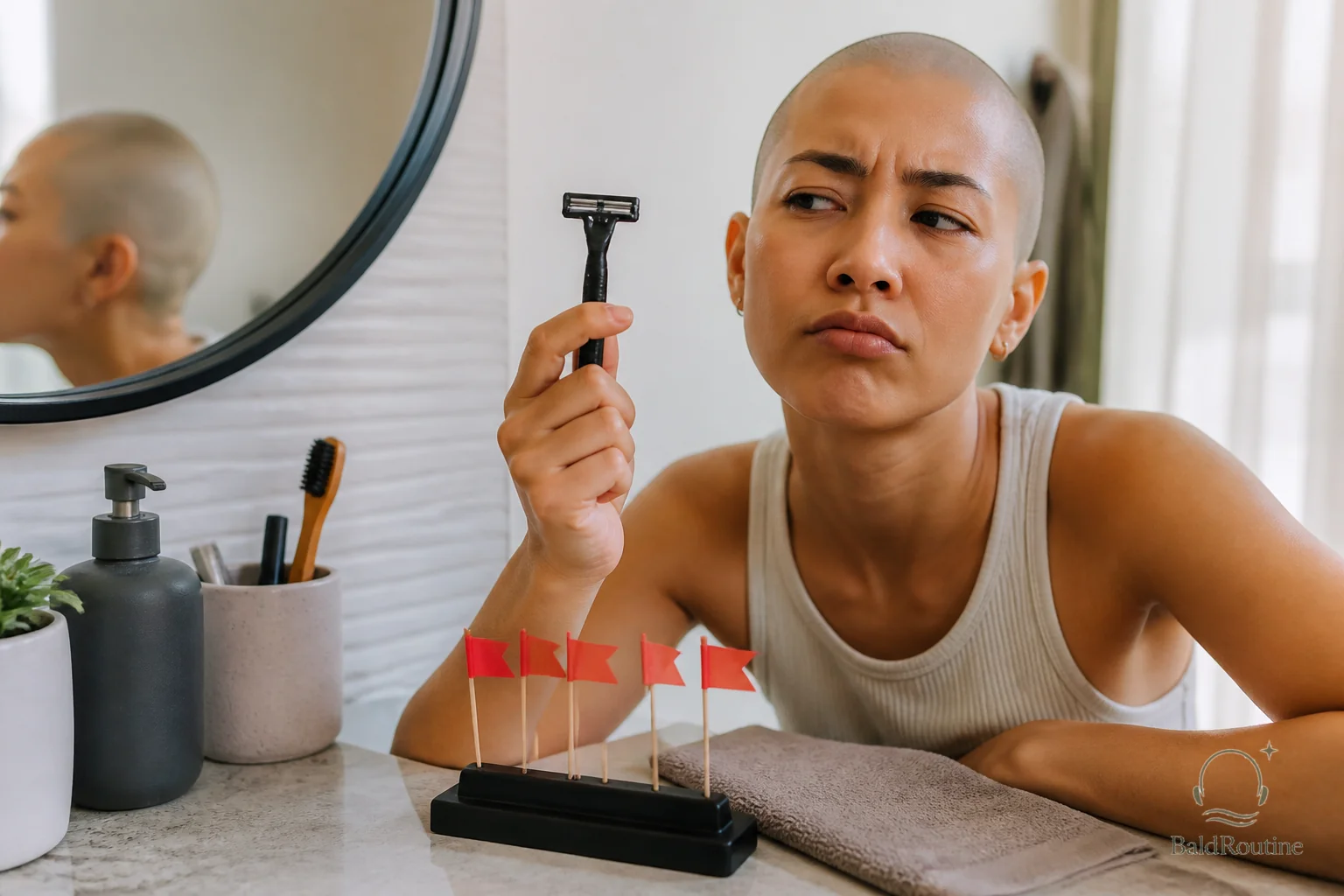
5 Signs a head shaving tool is too aggressive for your scalp
A close shave is nice. A scalp that feels like it got polished with sandpaper is not.
A lot of men blame their skin when head shaving feels rough. Sometimes that is fair. More often, the tool is doing too much. Too many blades. Too much pressure. Too much scraping over the same area. Too much faith in a gadget that looked clever online.
The goal is not to find the most intense shaving tool. The goal is to find the tool you can use consistently without your scalp complaining every time.
This is especially true if you shave often. A tool that feels fine once a week can feel harsh when you use it every morning.
1. Your scalp feels tight right after the shave
A little clean feeling after shaving is normal. Tightness is different.
If your scalp feels stretched, dry, or oddly shiny right after shaving, your tool may be removing more than stubble. That can happen with a razor that has too many blades for your skin, a dull cartridge that drags, or an electric shaver that makes you keep pressing harder to get a smooth pass.
The trap is thinking tighter means cleaner. It does not. It usually means your scalp needs a break.
Try this before buying anything new:
Use lighter pressure than feels necessary
Make fewer passes over the same area
Shave after softening the stubble with warm water
Rinse well and pat dry instead of rubbing
Use a light moisturizer after the shave
If the tight feeling drops when you change pressure, the tool might not be the only issue. Your technique was helping it misbehave.
2. You need multiple passes to get one area smooth
Some areas of the scalp are annoying. The crown, behind the ears, and the back of the head do not make life easy.
But if one patch needs pass after pass, your tool may not match your hair pattern or scalp shape.
A manual razor can struggle if you keep shaving over dry spots. A rotary head shaver can miss flatter or awkward areas if you move too fast. A foil shaver can be great on short stubble but less impressive if you let growth go too long.
That does not mean the tool is bad. It means it has conditions.
For a daily shaver, an electric tool may work well because the stubble stays short. For a person shaving every few days, a razor or trimmer first may make more sense. The wrong tool for your timing turns every shave into extra friction.
If you shave daily, read Daily head shaving without wrecking your scalp for a simple way to keep the routine from becoming punishment.
3. The same spots get red or bumpy every time
Repeat irritation is useful information. Annoying, yes. But useful.
If the same zones flare up after every shave, pay attention to what your tool is doing there. Common trouble spots include the neckline, lower back of the head, temples, and around old hairline edges.
A tool can feel fine on the top of your head and still be too aggressive for curved or sensitive areas. This is where pressure usually sneaks in. You want the tool to finish the job, so you push harder. The scalp pays for it.
A better move:
Stretch the skin gently only when needed
Use shorter strokes
Slow down around curves
Do not chase perfect smoothness on irritated spots
Give problem areas an extra day when they need it
If bumps are a recurring issue, the tool might be part of the story, but so are pressure, direction, and shaving frequency. For more on that, see 5 Things that make razor bumps more likely on a shaved head.
4. The tool works only when you press hard
This is the clearest sign your setup is off.
A head shaving tool should cut hair without needing to be mashed into your scalp. If it only works under pressure, one of three things is usually happening:
The blade or cutting head is dull
The tool is clogged or dirty
The tool is not suited to your hair length or shaving schedule
Pressing harder feels like a shortcut. It is not. It usually creates more drag, more heat, and more irritation. With razors, it can also make it easier to nick uneven areas. With electric shavers, it can make the head feel hot or scratchy.
Before replacing the tool, clean it properly and check the blade or cutter condition. If it still needs force, stop treating pressure like a feature.
The best head shaving tool is not the one that removes hair with the most drama. It is the one that works with a light hand.
5. Your scalp feels worse the more often you shave
A good tool should fit your real routine. Not your fantasy routine where you have twenty quiet minutes and perfect lighting every morning.
If your scalp feels fine after one shave but worse after two or three close shaves in a row, the tool may be too aggressive for frequent use. That does not mean you need to stop shaving. It may mean you need to rotate your approach.
Options that can help:
Use an electric shaver for maintenance days
Use a manual razor only when you want the closest finish
Leave one day between close razor shaves
Use a trimmer if your scalp feels irritated
Avoid trying to make every shave photo smooth
There is a tradeoff here. The closest shave often brings the most friction. The gentler shave may leave a tiny bit of shadow sooner. Pick the compromise you can actually live with.
What to look for in a gentler head shaving tool
You do not need a drawer full of gear. You need a tool that matches your scalp, hair growth, and routine.
For manual razors, look for comfort and control over blade count hype. A razor that is easy to angle around the head is better than one that feels like it was designed for a car commercial.
For electric shavers, think about how often you shave. Foil and rotary designs can both work, but they behave differently. Some do better on short daily stubble. Others are more forgiving around curves. None of them should require grinding your scalp to get results.
For beginners, simple is better. A tool you can rinse, clean, and use lightly will beat a complicated setup you secretly hate using.
Simple checklist before you switch tools
Before you buy another head shaving tool, run this checklist:
Does the tool cut without heavy pressure?
Does your scalp feel calm within a few hours?
Are you making two passes or five passes?
Do the same spots get irritated every shave?
Is the blade or cutting head clean and current?
Does the tool match how often you shave?
Are you chasing perfect smoothness when your scalp needs less?
If you fail one item, adjust your routine. If you fail several, your tool may be the wrong fit.
Keep the tool boring and the scalp calm
Head shaving should not feel like a toughness test. If a tool leaves your scalp tight, hot, bumpy, or annoyed every time, do not keep forcing it because the box said it was made for bald heads.
Use lighter pressure. Make fewer passes. Keep the tool clean. Match the tool to your schedule. And be honest about the finish you actually need.
A slightly less close shave that feels good all day beats a glass smooth scalp that feels angry by lunch.
If you want a simple bald head routine without turning your bathroom into a grooming aisle, build one at BaldRoutine.
Interest list
Want a product checklist?
Save a simple bald scalp care checklist and occasional practical tips. No routine is locked behind email.
Keep reading
Related guide
Stop adding products to a dry bald scalp
If your bald scalp feels dry after shaving, another bottle is not always the fix. Start with rinse, pressure, timing, and one boring moisturizer.
Related guide
Flaky bald scalp after shaving? try this simpler routine
A flaky bald scalp after shaving does not automatically mean you need a shelf full of scalp products. Start with a calmer shave, a better rinse, and moisturizer at the right time.
Related guide
Stop waiting until your bald scalp feels dry to moisturize
If your bald scalp feels fine after shaving but dry later, your timing may be the problem. A simple moisture step works better before your scalp feels tight.